The "Joint Teaching Practice Camp on Vernacular Construction Techniques of Grassland Pastoral Dwellings" is a national conditions education program for Hong Kong, Macao, and Taiwan funded by the Department of Education of Inner Mongolia Autonomous Region, jointly applied for and organized by the International Education College and the School of Architecture of Inner Mongolia University of Technology.
On October 10, 2026, in the golden autumn, the camp held its opening ceremony at the Architectural Design & Research Institute of Inner Mongolia University of Technology, presided over by Academician Zhang Pengju. On the same day, led by Professor Bai Liyan from the School of Architecture of Inner Mongolia University of Technology and Professor Xia Heng from The University of Hong Kong, a group of 16 teachers and students from both universities drove together to the construction base of the School of Architecture of Inner Mongolia University of Technology. Located at Gongger Family Ranch in Siziwang Banner, Ulanqab League, the base was established in 2019 by Academician Zhang Pengju’s team and mainly serves the demonstration and promotion of vernacular construction techniques for grassland pastoral dwellings.
Teachers and students from the two universities commenced their seven-day inter-collegiate joint teaching activities on October 11.
Activity Content:

Group Photo at the Opening Ceremony
Field Investigation of Vernacular Construction Techniques of Grassland Pastoral Dwellings
The activities began with site and resource observation. Participants documented the topography, water systems, roads, and material sources surrounding the campsite, and observed facilities such as wind turbines, photovoltaics, water intake, and lighting. Materials such as earth, grass, wood, and stone were also documented through photographs and sketches from raw materials to final application.
These observations helped everyone contextualize construction within a real site: understanding where materials originate, how they are processed, and how they enter the specific construction process.

Field Investigation of a 1950s Raw-earth and Timber-structure Granary

Field Investigation of Vernacular Construction
Hands-on Practice with Materials and Techniques for Grassland Pastoral Dwellings
From touching the mud to shaping it into adobe bricks, participants perceived the state preceding the birth of architecture through the most primal materials.
The production of adobe bricks started with soil selection, sieving, and batching, and gradually unfolded the brickmaking process through mixing, molding, tamping, demolding, and sun-drying. Every step required close attention to the state of materials and operational details.

Preparation for Adobe Brick Production

Adobe Brick Production

Demolding and Transportation of Adobe Bricks
From stacking bricks layer by layer to the gradual emergence of the kiln body, teachers and students grasped material characteristics and structural order through hands-on practice and collaborative assembly. With brick as the bone and fire as the medium, they explored the tectonic wisdom of traditional brick kilns between each laid brick, sensing the profound connection among earth, fire, and construction techniques.

Brick Kiln Construction

Hands-on Experience in Laying and Building the Brick Kiln

Kiln Firing Ceremony
As pieces of timber connected with one another, structure was no longer merely lines on a drawing, but became a spatial logic tangible to the hands.
The reciprocal timber frame enabled participants to begin with ground setting-out, join components one by one, and accomplish positioning, propping, closing, and leveling. How components mutually support and how joints bear loads could be observed directly in real construction.

Hands-on Experience in Assembling the Reciprocal Timber-frame Roof
With timber as the skeleton and tectonics as the order, participants explored the integration of prefabricated construction and the traditional Mongolian yurt typology through component splicing and spatial enclosure, experiencing the continuity and rebirth of nomadic wisdom within a contemporary construction context.
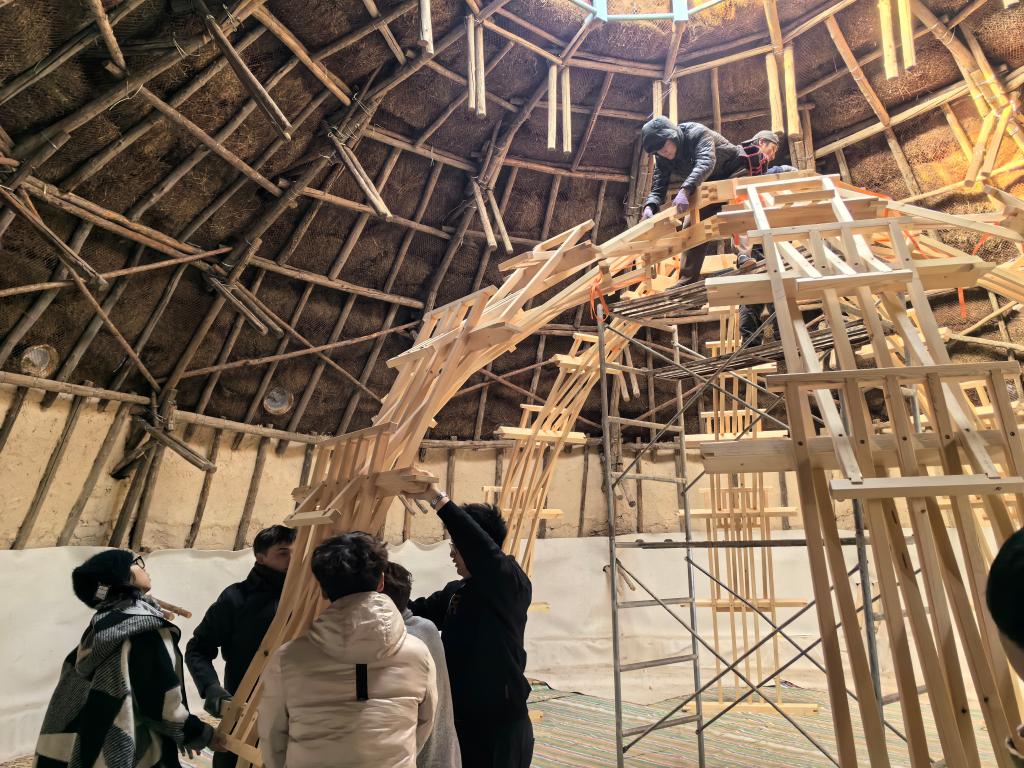
Hands-on Assembly Experience of Prefabricated Timber Yurt-style Structures
When soft straw is stacked and arranged, ordinary natural elements begin to hold the power to enclose space.

Teacher Liu Chunyan Guiding the Construction of the Straw-bale Dome

Straw-bale Dome Construction
From parts to the whole, and from assembly to enclosure, understanding the response of nomadic architecture to nature, dwelling, and mobility.

Hands-on Experience in Assembling a Traditional Mongolian Yurt
Beyond manual construction, participants also experienced operating a wheel loader. Mechanical operation offered insights into the role of heavy machinery in site work.
Both operation and field surveying require safety awareness and meticulous observation. Documenting the on-site process ensures that the experience does not merely remain in the moment, but can also be compiled, revisited, and shared.

Wheel Loader Operation Experience
Study and Experience of Grassland Pastoral Culture, Folk Customs, and Folk Arts
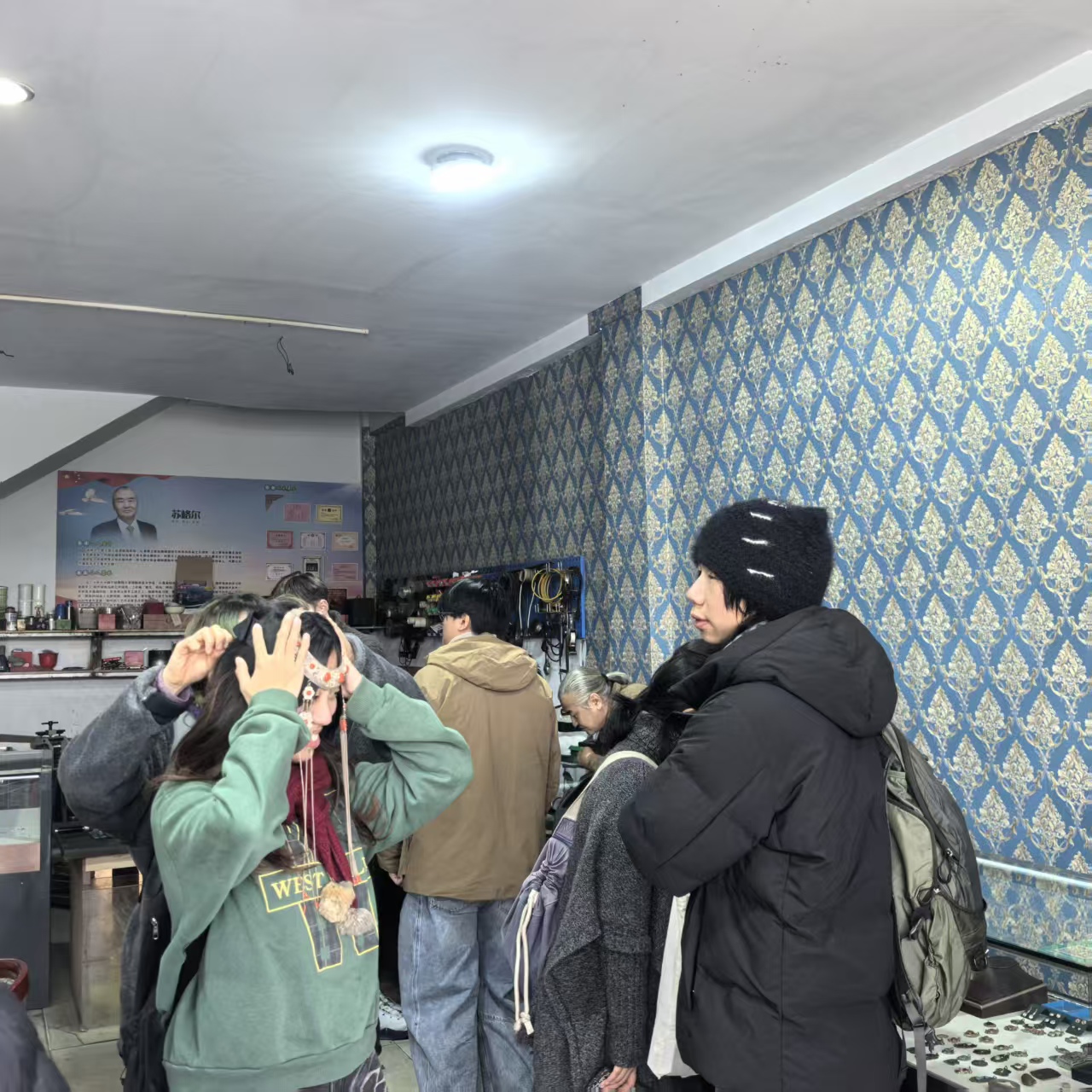
During the camp, teachers and students visited sites of local culture and traditional crafts, enjoyed song and dance performances, and took part in activities including calligraphy, painting, ceramics, silversmithing, felt embroidery, leather carving, and harness making. Through lenses, sketches, and words, everyone recorded highlight moments of the performances, artisans' craft processes, as well as details of tools and artifacts. Through first-hand experience and attentive observation, teachers and students sensed the intimate link between traditional techniques and grassland life, gaining a more tangible understanding of local culture. During documentation and sharing, participants prioritized communication with performers and artisans, leaving behind authentic and precious memories founded on respect and understanding.

Visit to the Silver Workshop
Ceramics Experience

Group Photo with Ulan Muqir of Siziwang Banner

Group Photo in Traditional Ethnic Costumes
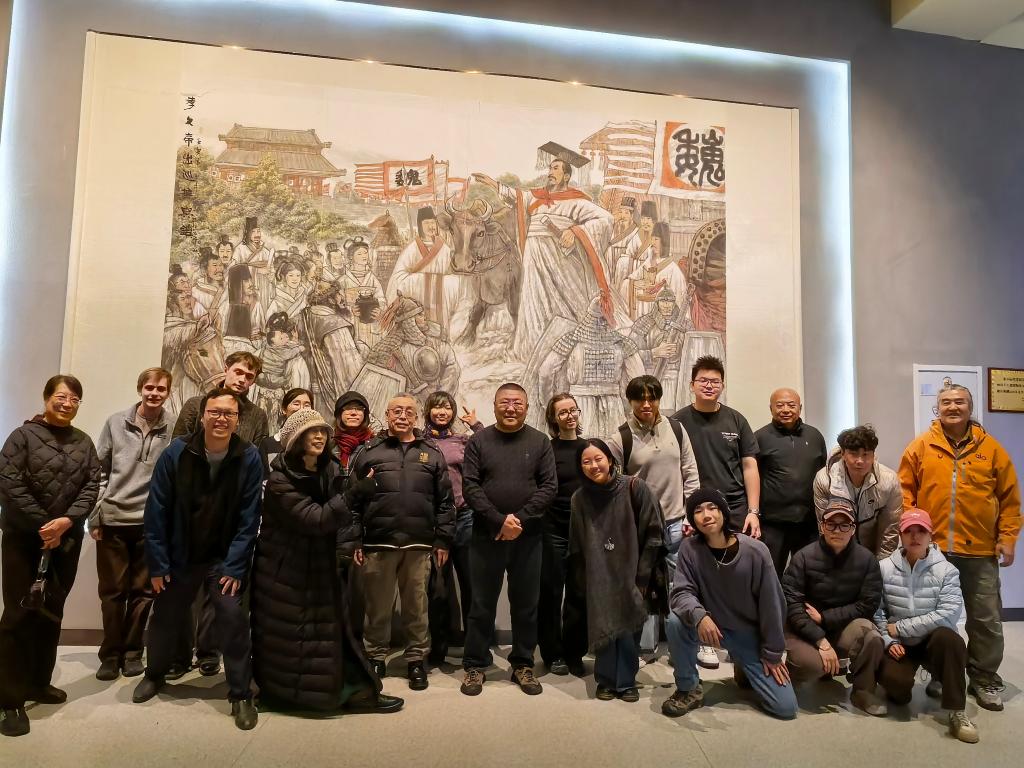
Group Photo at the Siziwang Banner Museum
At the end of the program, the closing ceremony drew a conclusion to this journey of grassland construction and cultural experience. Reflecting on days of observation, practice, and exchange, participants translated their on-site experiences into photos, sketches, and texts, while sharing their individual insights on materials, construction, and collaboration.
From soil, straw bales, and timber to tools, structure, and human teamwork, these experiences rendered architecture tangible and visible. Material choices, application methods, and on-site conditions were intertwined; how a structure took shape was inseparable from division of labor, coordination, and continuous adjustments.
What the activity leaves behind is not only imagery and records, but also each participant’s personal reflections on low-material consumption, low-carbon construction, and collaboration. Bringing these experiences back to classrooms and design studios allows the observations and practices from the Gongger Grassland to continue extending forward.
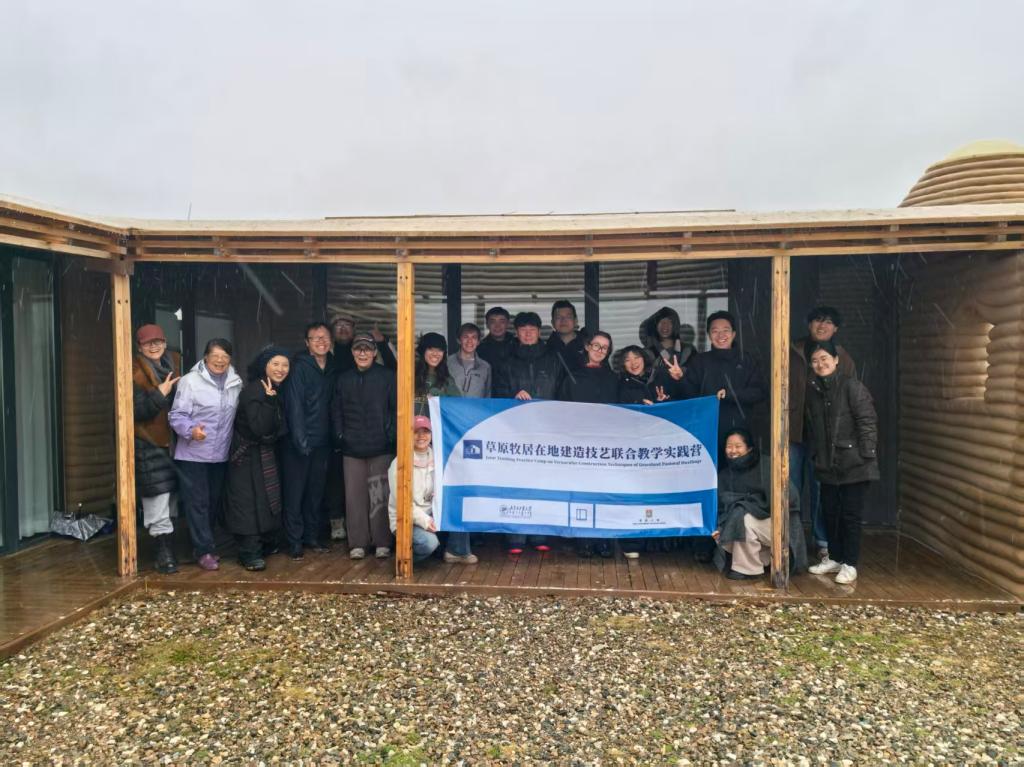
Group Photo at the Closing Ceremony
Conclusion
Using the vernacular construction of grassland pastoral dwellings as a bond, this joint teaching practice provided a shared platform for teachers and students from Inner Mongolia University of Technology and The University of Hong Kong for joint investigation, hands-on practice, and mutual exchange. Through field visits, material and tectonic practice, and folk cultural experiences, teachers and students deepened mutual understanding and enriched their perception of Inner Mongolia's regional culture, grassland life, and local building practices.
As a tangible realization of national conditions education for Hong Kong, Macao, and Taiwan, the program helped students from Hong Kong get close to Inner Mongolia, understand local culture and developmental practices, and encouraged teachers and students from both universities to build lasting connections through communication and collaboration. This shared learning experience lays the foundation for future inter-collegiate joint teaching, youth exchanges, and related academic cooperation.
Understanding materials on the grassland and comprehending tectonics through hands-on practice. This journey on the Gongger Grassland will continue to be preserved and shared in the form of images, sketches, and words.
Supporting Organizations
Inner Mongolia University of Technology Architectural Design Co., Ltd.
Inner Mongolia Siziwang Banner Xinmin Cultural Tourism Investment & Development Co., Ltd.
Siziwang Banner Yicheng Animal Husbandry Co., Ltd.
Bureau of Culture and Tourism of Siziwang Banner
Hongshan Art Museum of Siziwang Banner
Ulan Muqir of Siziwang Banner
Siziwang Banner Museum